
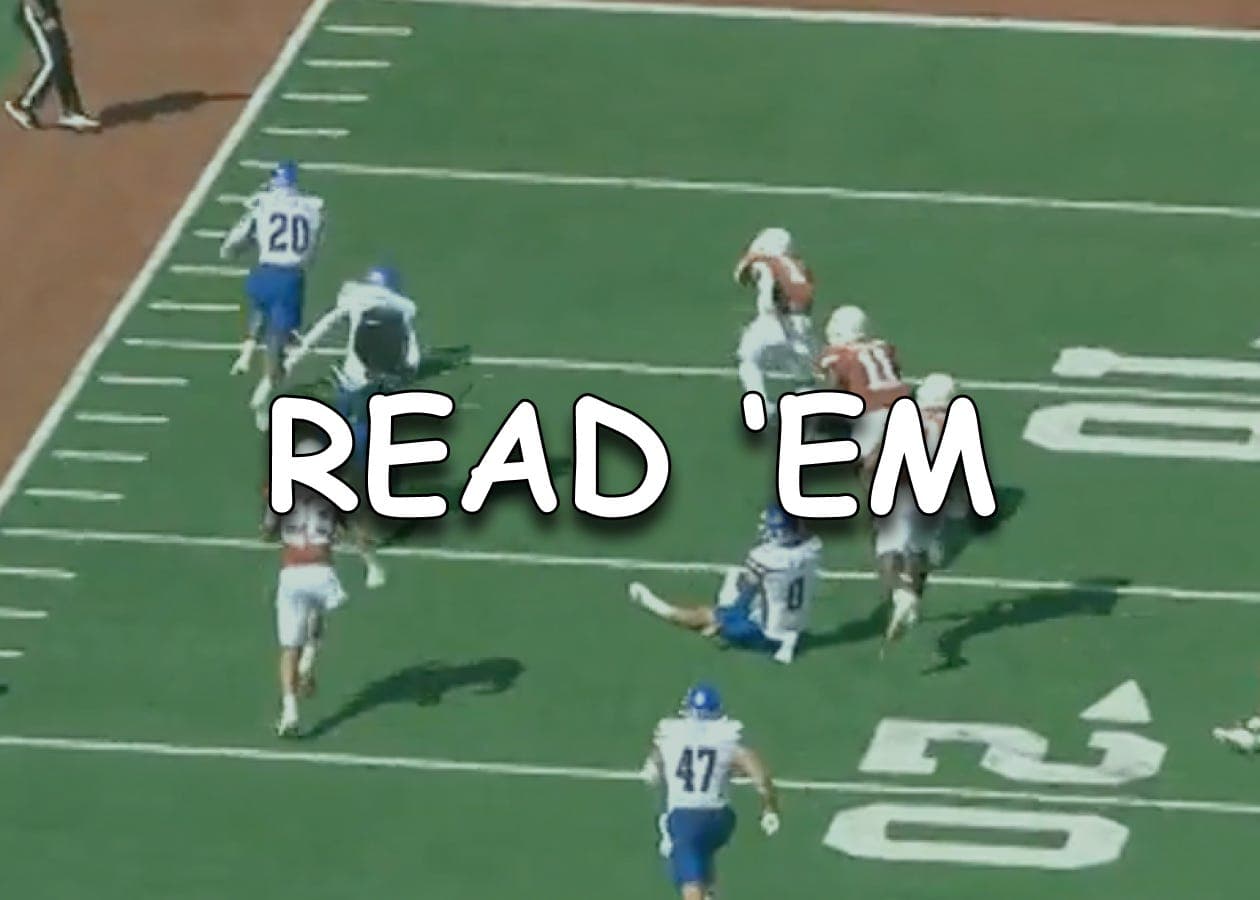
Speaking of all these RPOs the past couple days has begged us to look at some triple option principles. While the Jayhawks aren’t lining up in the Flexbone and having at it, they mix the principles into their spread scheme.
The Kansas Jayhawks gave it their best shot last fall against the Texas Longhorns. Their offense is a hodgepodge of different personnels and concepts, but their triple option concepts are must-watch-tv. They don’t run them a whole lot (at least in this game), but when they bring them out they make a splash. Their other concepts and willingness to get in empty and other spread formations keeps the defense from sticking too many people in the box. At least in this game, this scheme allowed Kansas’ triple concepts to get really great numbers looks.
The triple option consists of the dive, the keep, and the pitch. It’s perfect at fixing the numbers problem because you don’t block players in the immediate run box. This allows the offense to steal blockers and allocate them to second and third level defenders. In this post, we’ll look at two examples and pay special attention to how these plays worked against Texas’ MOFO structures.
Play 1
The Jayhawks dialed up this one to start the game and it worked quite well. The Longhorns looked unprepared for it since the Jayhawks were aligned in 21 personnel and the Longhorns only had six defenders in the box out of a MOFO structure. So since the Jayhawks didn’t block two defensive linemen, the Longhorns were in a serious numbers disadvantage in the box. Moreover, they lost the numbers in the secondary since the Jayhawks could now allocate more people to block out there.
The result:
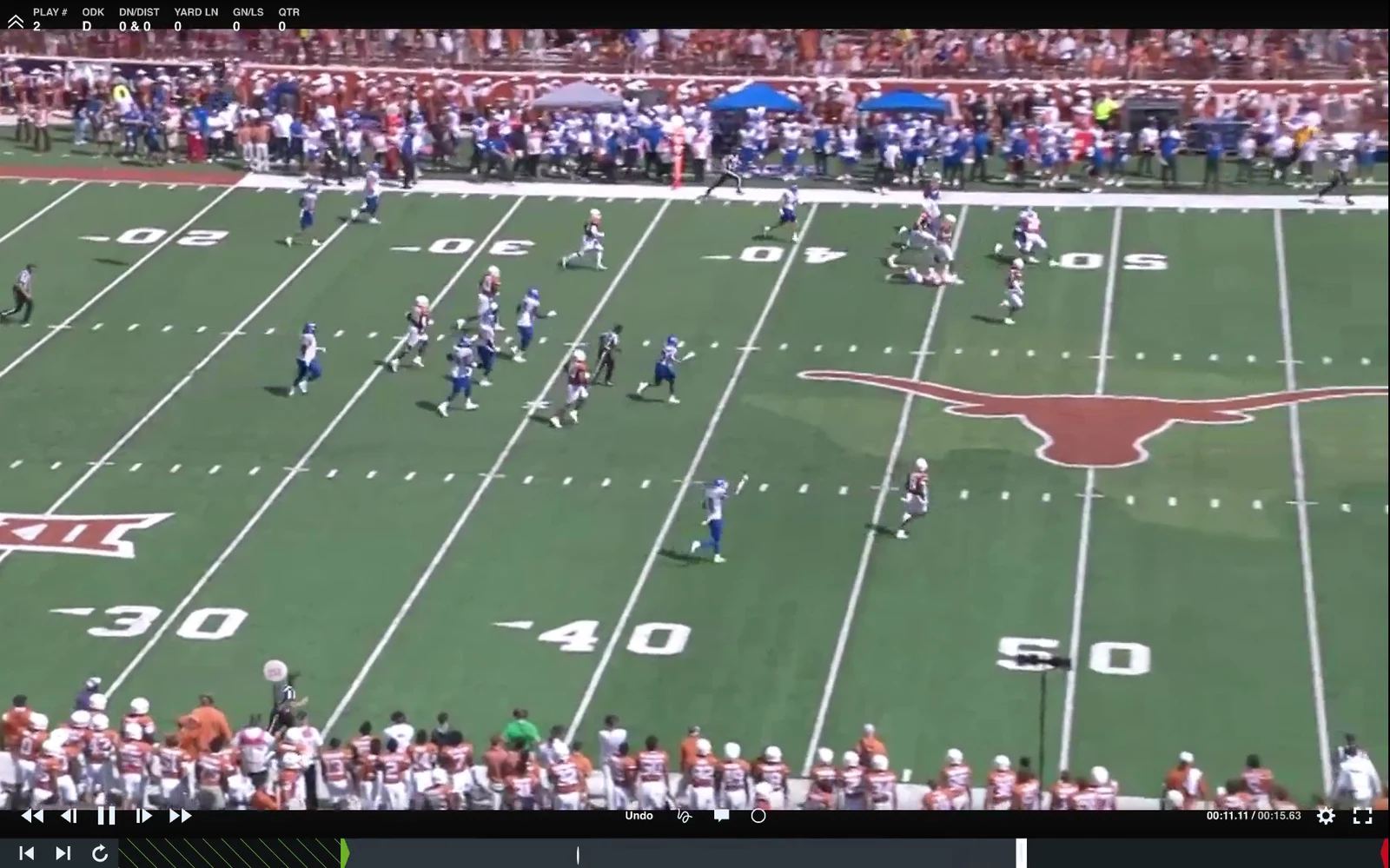
This play is about as good as it gets when you’re running the triple. The QB read the DT for the dive and the DE for the pitch. This left the TE available to block the cornerback and the WR pushed up to the safety. So where a normal RPO would leave those secondary defenders unblocked, this triple concept leaves those in the box unblocked. All the secondary defenders are blocked up and the defensive line is left doing nothing.
Play 2
This play is first and foremost an example of why it never hurts for the pitch to always stay in pitch relationship (you will see why at the end of the play). Once again, the Longhorns are choosing to play MOFO against 21 personnel. Kansas doesn’t live in the triple — they move in and out of formations and personnels so Texas is taking a more reactive approach to defending the offense. This factor only helps Kansas when they decide to pull out their triple because they get such great numbers in the box.
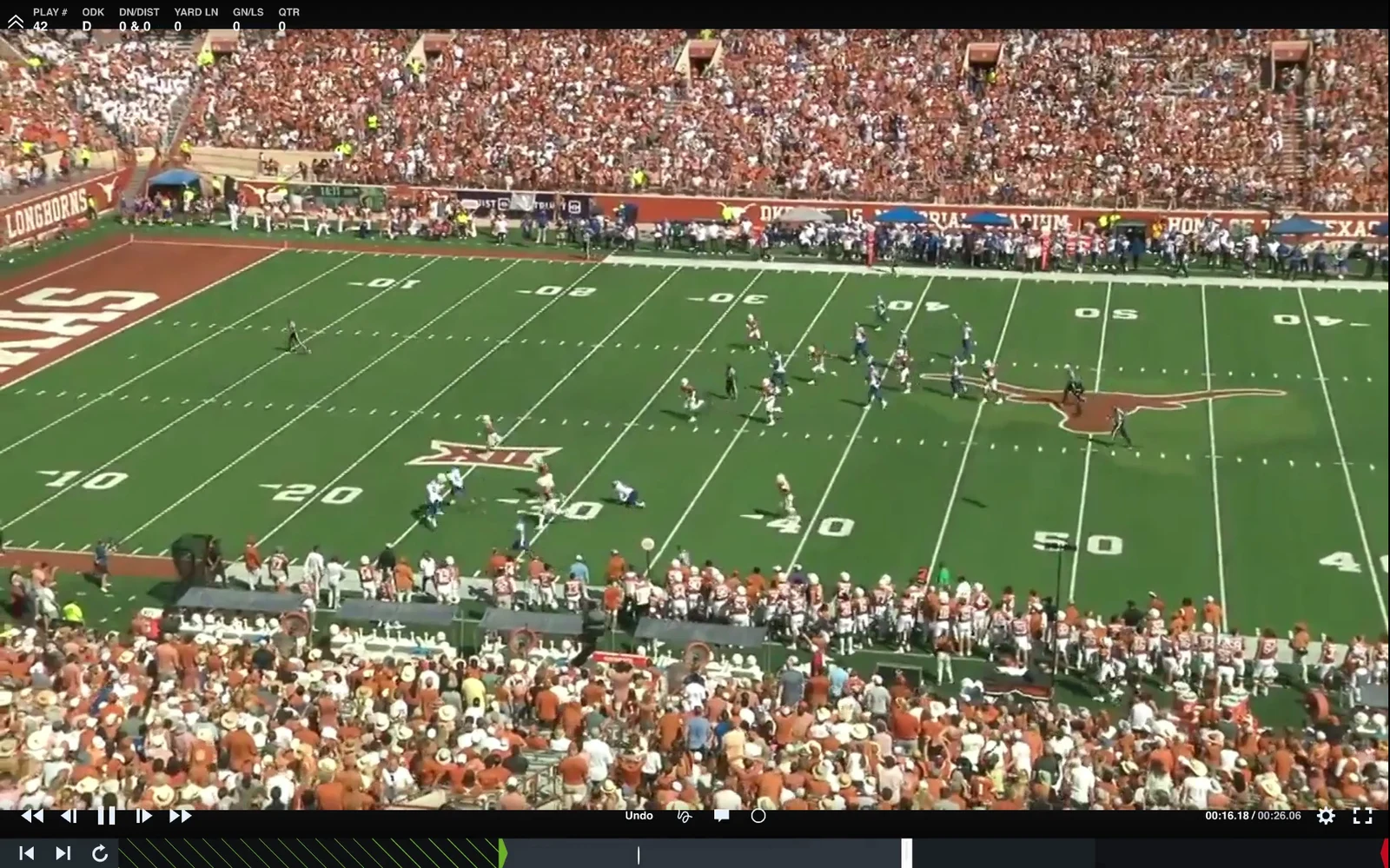
I’m honestly not sure what prompted the QB to keep the ball here and not give to the dive. The two unblocked defenders in the box were the defensive end and the weak inside linebacker. So I don’t know who was the dive but it all works out and the QB ends up one on one with the safety who just completely misses the tackle. Great. And then with the QB streaking down the field he runs out of gas a little and gets lambasted, but no worries, the pitch man didn’t abandon his duties and scooped up the ball for the TD. Just like you draw it up.
The Triple is Great
The triple option’s principles are the ultimate way to keep the numbers in the offense’s favor. While the RPO is the deemed the modern triple option, so is what Kansas is doing. They’re not under center in the Flexbone like the military schools. They’re running a spread offense that makes the defense play them like a spread offense, so when they pull out these triple concepts they seem to be guaranteed a good numbers look. Great stuff.
Until tomorrow,
Emory Wilhite
Thanks for reading — Subscribe to get the next post in your inbox tomorrow morning: